4th World Congress on
Advances in Mental Health and Psychiatry
THEME: "Frontiers in Mental Health and Psychiatry Research"
 23-24 Mar 2026
  London, UK
 THEME: "Frontiers in Mental Health and Psychiatry Research"
23-24 Mar 2026
London, UK 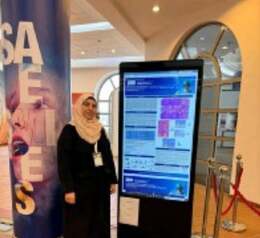
Batterjee Medical College (BMC), Saudi Arabia
Title: Mental Health Burden and Service Barriers Among Medical and Health Sciences Students: Prevalence and Determinants from a Cross-Sectional Analysis
Shaimaa Hassan is an accomplished academic and researcher with dual appointments at Batterjee Medical College (BMC), Saudi Arabia, and the Faculty of Medicine, Menoufia University, Egypt. As an Associate Professor, she is actively involved in medical education, curriculum design, program coordination, and student mentorship.
Her research focuses on experimental and clinical studies, stem cells, disease models, nanoparticles, histology, tissue biology, and cellular structure–function relationships, in addition to emerging directions in medical education. She has authored numerous peer-reviewed publications in Q1–Q2 journals indexed in Scopus and Web of Science and maintains active research profiles across international scholarly platforms, including Google Scholar, Scopus, ResearchGate, ORCID, and Web of Science.
She also holds several professional certifications in medical education, assessment, bioethics, and the application of artificial intelligence in teaching and learning. Her ongoing academic and research contributions continue to support innovation in medical sciences and enrich the educational experience for future healthcare professionals.
Background:
Medical and health sciences students face significant academic, clinical, and social pressures that increase their risk of psychological distress. Prior studies report elevated levels of depression, anxiety, and stress in this group. Barriers to accessing mental health services such as stigma, confidentiality concerns, limited awareness, and fear of negative consequences further compound this risk. Understanding the prevalence, determinants, and service barriers is essential for developing effective support systems.
Aim:
To determine the prevalence and determinants of depression, anxiety, and stress among medical and health sciences students at Batterjee Medical College, Saudi Arabia, and to identify barriers limiting their access to mental health services.
Methods:
A cross-sectional study was conducted among 384 students using a self-administered online survey. The Depression Anxiety Stress Scales-21 (DASS-21) assessed psychological distress, while the Barriers to Mental Health Services Scale-Revised (BMHSS-R) measured perceived obstacles to seeking help. Data were analyzed to identify prevalence, associated demographic and academic factors, and barriers to mental health service utilization.
Results:
Depression, anxiety, and stress (DAS) were evaluated using validated DASS-21 subscales demonstrating excellent internal consistency (? > 0.88). The total BMHSS score showed significant associations with academic factors, including major, year of study, and GPA (P ? 0.01). Gender was a strong predictor of psychological distress, with female students reporting significantly higher mean scores across all DAS domains (P ? 0.000439). Age was significantly associated with anxiety and stress (P ? 0.024). Students residing in urban areas reported higher anxiety scores than those in rural regions (P = 0.029). These findings identify gender, age, and residence as key demographic risk factors requiring targeted interventions.
Conclusion:
The study found a high prevalence of depression, anxiety, and stress among medical and health sciences students, with demographic and academic characteristics emerging as significant correlations. Intrinsic barriers, such as stigma and self-reliance, and extrinsic barriers, including accessibility and cost, further limited help-seeking and compounded psychological distress. These findings emphasize the need for comprehensive institutional mental health strategies and longitudinal research to enhance student well-being.
Keywords:
Prevalence, Determinants, Depression, Anxiety, Stress, Mental health services, Medical & health sciences students
